
Types of Vehicle Fire Suppression Systems — The Most Complete Guide for India
Why Choosing the Right Type Actually Decides Whether Your Vehicle Survives
There is a question that every mine manager, fleet supervisor, and safety officer in India eventually asks — usually after an incident, and almost always too late: "Was that the right system for that machine?"
It is the most important question in vehicle fire protection, and the most frequently skipped. Walk through any mining fleet in Jharkhand or Chhattisgarh, any logistics depot in Delhi NCR, any construction site in Maharashtra — and you will find vehicles with fire suppression cylinders bolted to the chassis. Red cylinders, pressure gauges in the green, stickers declaring compliance. Ticked boxes.
But ask whether the system on that 120-tonne dumper was designed for that specific machine. Ask whether the nozzle in the hydraulic bay was positioned against the actual fluid routing of that chassis. Ask whether the 9 kg DCP system on that LPG forklift operating in an enclosed Pune warehouse was the right agent choice for a confined-space propane fire. You will get silence, or a shrug, or "the contractor said it was fine."
Vehicle fire suppression is not a category. It is a matrix — of vehicle type, fire risk zone, operating environment, agent chemistry, detection method, and compliance framework. Getting that matrix right is what separates a system that actually extinguishes a fire from a system that performs a compliance tick on paper and fails in the engine bay.
This guide covers every type of Vehicle Fire Suppression system available in India. Not generically — with the specific technical depth that tells you what each type actually does, why it is designed for certain vehicles and not others, what the real-world risks are that it protects against, and how APS Fire Protection Solutions designs, prices, and deploys each one. We have pulled directly from the systems we build and install, the certifications we carry, and the Indian regulatory framework we work within every day.
This is the guide we use internally when a new client calls from a coal mine in Odisha or a logistics company in Gurgaon and asks: "What type of system do I need?"
First — The Four Protection Zones on Any Vehicle
Before getting into system types, you need to understand how fire engineers think about a vehicle. Every vehicle fire suppression system — regardless of agent type, vehicle class, or price point — is designed around protecting one or more of four standard protection zones. The zones are the same whether the vehicle is a 200-tonne haul truck or a 1.5-tonne electric forklift. What differs is the fire risk severity in each zone, the agent best suited to it, and how many zones your specific vehicle actually requires.
The Engine Compartment is the primary protection zone on almost every vehicle. This is where diesel fuel, engine oil, hydraulic connections, turbocharger surfaces, and exhaust components coexist in a confined, high-temperature space. The turbocharger alone can run above 650°C surface temperature under load. A pinhole in any fuel or hydraulic line in this zone means atomised flammable fluid in direct proximity to an ignition source hot enough to light a match at twenty times its rating. Engine compartment fires account for the majority of serious vehicle fire incidents in India across all vehicle categories.
The Hydraulic Bay is the zone most frequently underestimated on heavy vehicles. HEMM machines — dumpers, excavators, dozers, loaders — carry hydraulic systems operating at 200–350 bar with total fluid volumes often exceeding 300–500 litres. A hydraulic hose failure at these pressures does not drip — it atomises. Atomised hydraulic oil in proximity to exhaust surfaces ignites almost instantaneously and produces a fire with more energy than the equivalent volume of diesel. Hydraulic bay protection is a mandatory design consideration on any HEMM system, and its omission from a vehicle system is one of the most dangerous specification shortcuts in the Indian market.
The Battery Compartment has become the most technically complex protection zone across all vehicle categories following the rapid growth of electric vehicles and the proliferation of lithium-ion battery packs in industrial equipment. A conventional lead-acid truck battery presents a specific but manageable fire risk from acid boilover and electrical arcing. A lithium-ion battery pack in an electric bus or EV forklift presents thermal runaway — a different, self-sustaining, chemistry-driven fire that conventional dry powder cannot fully address in the same way. Battery compartment protection now demands its own design approach depending on battery chemistry.
The Operator Cabin is the last protection zone, and in passenger-carrying vehicles — buses, coaches, school buses — it is the most critical from a life-safety perspective. Cabin fire protection is not primarily about saving the vehicle. It is about giving occupants enough time to evacuate before the cabin becomes uninhabitable. The science behind this zone is different from the other three: the goal is not instant suppression but sustained management of heat and smoke conditions for a defined evacuation window.
Types of Vehicle Fire Suppression Systems — Complete India Guide
1. Engine Fire Suppression System for Vehicles
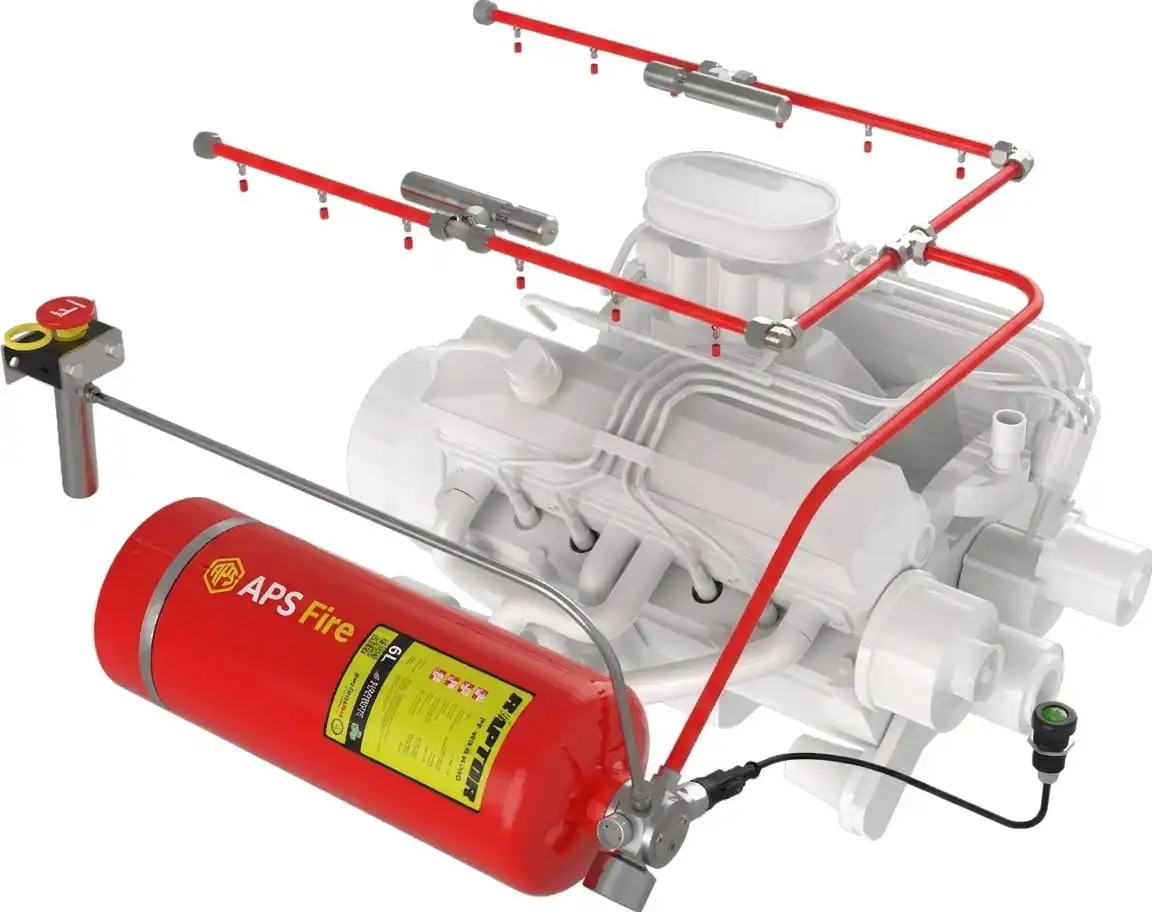
The Engine Fire Suppression System is the foundational vehicle suppression product — the baseline system that every other variant builds on. It is designed specifically around the engine compartment fire risk, where diesel fuel lines, oil circuits, turbochargers, and exhaust components create the highest-probability fire ignition scenario across all commercial and industrial vehicles.
The system uses dry chemical powder (DCP) as its suppression agent — specifically ABC-rated monoammonium phosphate powder or BC-rated potassium bicarbonate powder discharged under nitrogen pressure through a fixed nozzle network routed inside the engine bay. The powder interrupts the combustion chain reaction chemically, knocks down flame mechanically through its discharge velocity, and displaces oxygen in the immediate fire zone. On Class A, B, and C fires — the three fire classes that account for virtually all engine compartment fire scenarios — DCP is fast, proven, and effective.
Detection is provided by Linear Heat Sensing (LHS) cable routed through the engine bay. The cable activates automatically at its rated temperature threshold — typically 138°C for pre-alarm and 180°C for suppression discharge in heavy vehicle applications — at any point along its length, triggering the solenoid valve and releasing the suppression agent. Manual activation is provided through a cab-mounted pull-pin or push-button as a backup.
This is the correct choice for the broadest range of Indian vehicles: trucks (all classes), mining vehicles, fuel tankers, construction vehicles, agriculture equipment, airport ground support vehicles, and buses where an engine compartment system is required as a standalone installation.
APS Fire Protection Solutions Engine Fire Suppression System: Starting at Rs. 55,500 per piece. Capacity: 25 kg dry chemical. Suppression agent: DCP to IS 4308 / 14069. Protection zones: engine compartment, cabin, battery compartment, fuel tank area. System operation: automatic and manual. Detection: LHS cable. Operating temperature: -20°C to +55°C. Certifications: CE, IS: 16018, IS: 15683, ISI, ISO, R107, UL Listed. Fire class: A, B, C. Fire rating: 13B to 55B.
2. HEMM Machine Fire Suppression System (Heavy Earth Moving Machinery)
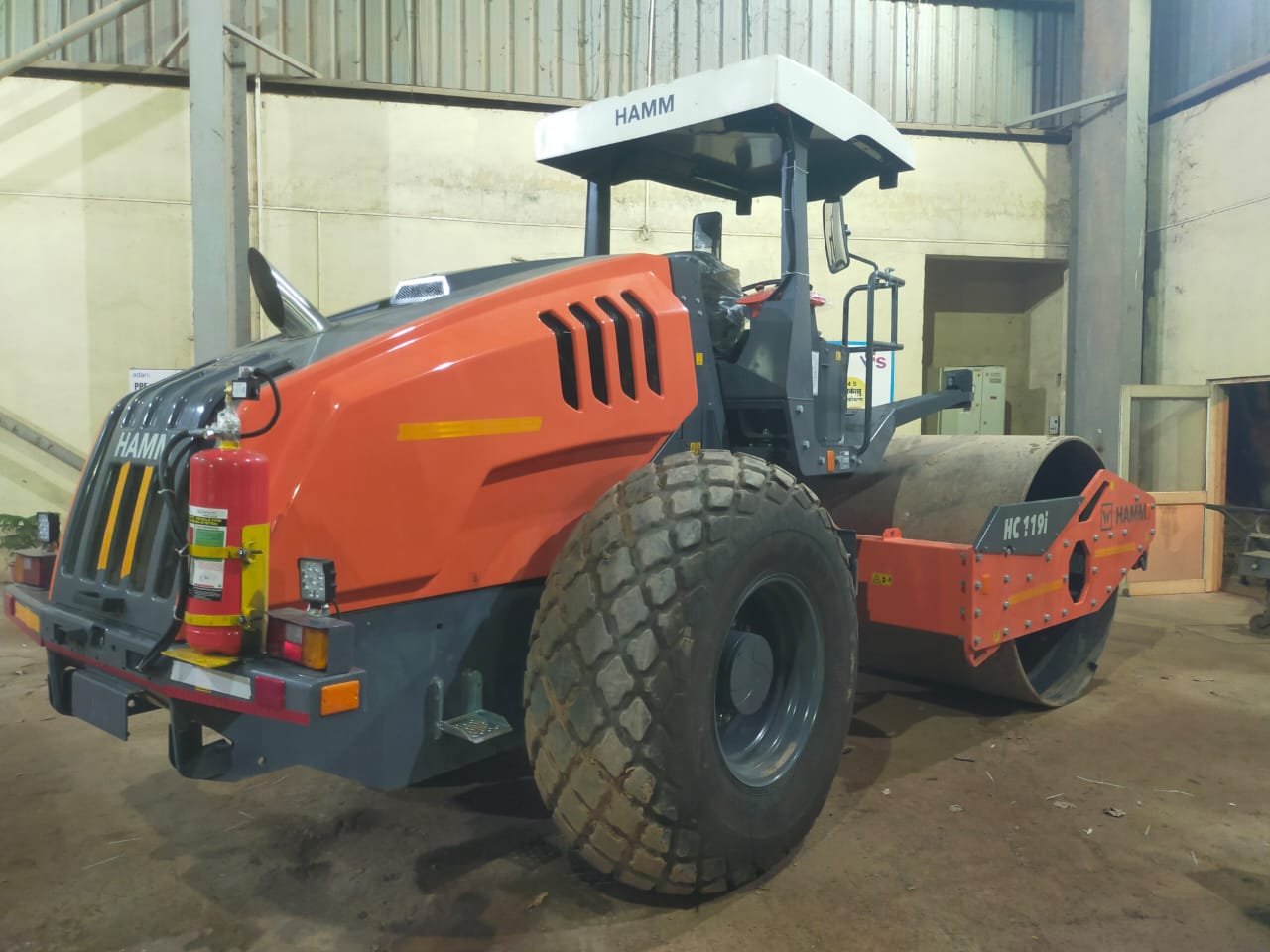
The HEMM Fire Suppression System is the most technically demanding and most legally mandated category of vehicle fire suppression system in India. Heavy Earth Moving Machinery — dump trucks, hydraulic excavators, front-end loaders, motor graders, bulldozers, and drilling machines — operates in conditions that produce a fire risk profile unlike any other vehicle category.
The combination of factors is brutal: diesel engines running at maximum load for extended shifts, hydraulic systems under extreme pressure running through hoses that pass within centimetres of 600°C exhaust surfaces, ambient temperatures on Indian open-cast mine benches regularly exceeding 45°C in summer, continuous vibration that fatigues pipe joints and cable connections over thousands of hours, and dust contamination that accelerates detection system degradation faster than in any other environment.
DGMS Technical Circular No. 6 of 2020 — issued on 27 February 2020, following a technical workshop at DGMS Headquarters attended by over 260 industry representatives — mandates Automatic Fire Detection and Suppression Systems for all HEMM vehicles operating in Indian coal and metalliferous mines. This is a legally enforceable requirement. HEMM vehicles operating in Indian mines without a compliant AFDSS system are subject to prohibition notices from DGMS inspectors that physically stop the machine from operating.
The HEMM system design addresses multiple protection zones simultaneously: engine compartment, hydraulic bay, wheel arch areas (brake heat risk), electrical distribution panel, and operator cabin alarm. Thermal tube detection technology — pressurised polymer tubing routed directly through fire hazard zones that self-activates on flame contact — is particularly well suited to HEMM applications because it requires no electrical power in its basic direct-acting form. This is a significant advantage on mining HEMM vehicles where vibration-induced electrical faults are a real and recurring maintenance issue.
Cylinder capacity is scaled to the vehicle: 10 kg systems for light HEMM, 20 kg for medium excavators and loaders, 40 kg for large dumpers and shovels. The working pressure of 15 bar and discharge time of 7–10 seconds are engineered to achieve complete agent coverage across the full protection zone within the critical suppression window.
APS Fire Protection Solutions HEMM Machine Fire Suppression System: Starting at Rs. 70,500 per piece. Capacity: 10–40 kg. Detection: thermal tube technology. Agent: BC dry powder. Protection: engine, hydraulic bay, fuel tank, battery, cabin. Certifications: UL Listed, R107. DGMS compliant. Cylinder mounting: vertical (for HEMM chassis geometry). Cabin alarm included. Made in India.
3. Mining Vehicle Fire Suppression System
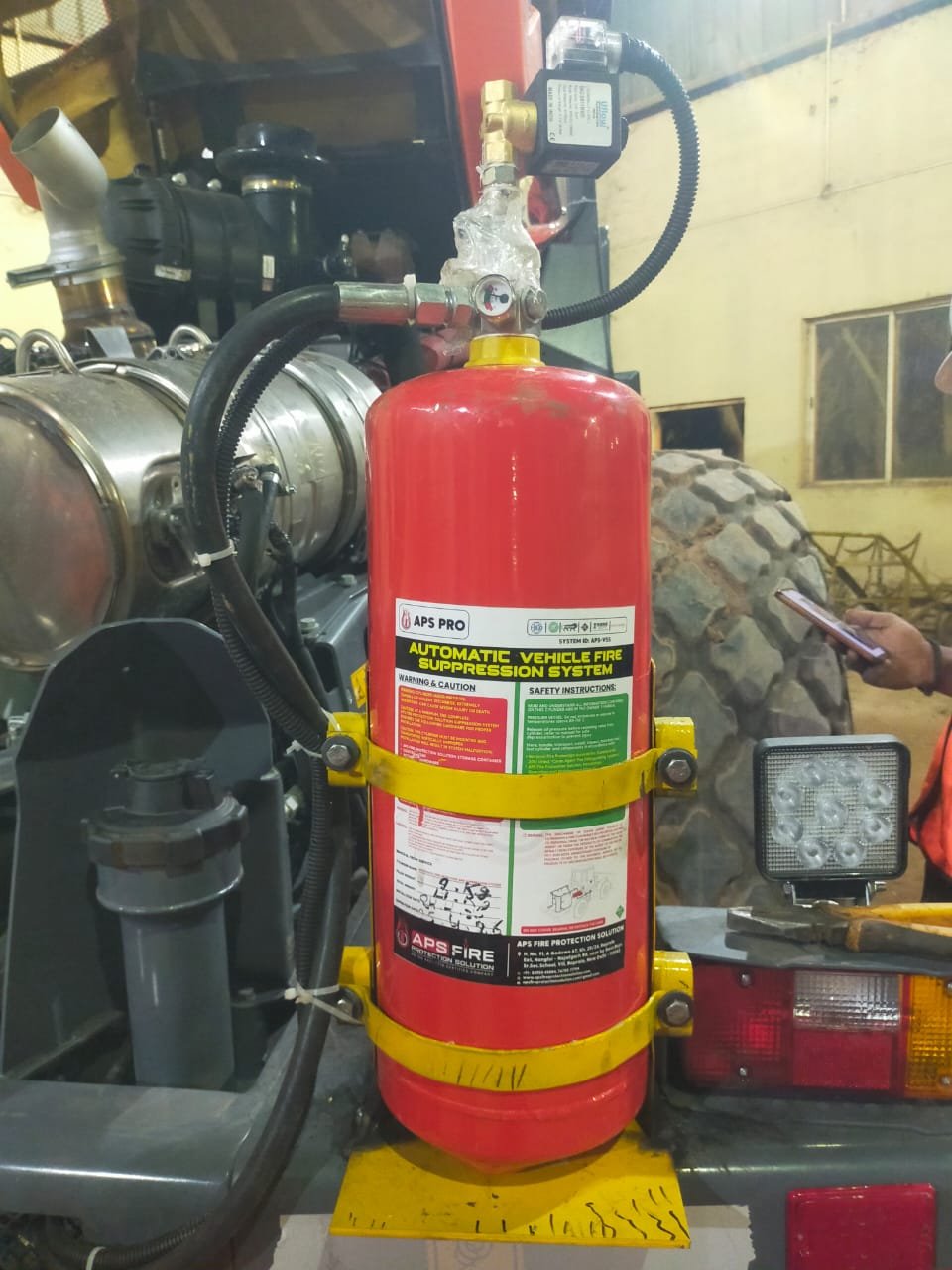
The Mining Vehicle Fire Suppression System is the broader category that covers the full range of vehicles operating within Indian mine boundaries — including haul trucks, water bowsers, service vehicles, coal transport trucks, and support equipment that may not technically be classified as HEMM but still operate in the mine environment and carry the same fire risk exposure.
The distinction from the HEMM system is scope. The HEMM system is specifically engineered for the largest, most complex earth-moving machines. The Mining Vehicle system covers the wider fleet that every functioning mine depends on: the 25–50 tonne dump trucks that feed the primary crusher, the maintenance vehicles that service equipment in the pit, the fuel bowsers that refuel machines underground, the blast crew support vehicles. All of these operate in the same high-dust, high-heat, extreme-vibration environment as the HEMM fleet but have different chassis geometries, different agent payload requirements, and different DGMS documentation needs.
Working pressure for the APS Mining Vehicle system is 25 bar — higher than the standard HEMM system — to ensure adequate nozzle coverage across larger protected zone configurations. The system is rated to 120°C operating temperature and 95% humidity, reflecting the conditions of Indian mine environments in monsoon season where moisture ingress into electrical systems is a significant failure risk.
APS Fire Protection Solutions Mining Vehicle Fire Suppression System: Starting at Rs. 80,000 per set. Capacity: 12 kg. Agent: dry chemical. Working pressure: 25 bar. Operating temperature: up to 120°C. Protection: engine, battery, fuel tank, cabin. Certifications: UL Listed, FM Approved, R107, AIS 135. Cabin alarm included.
4. Earthmoving Machine Fire Suppression System
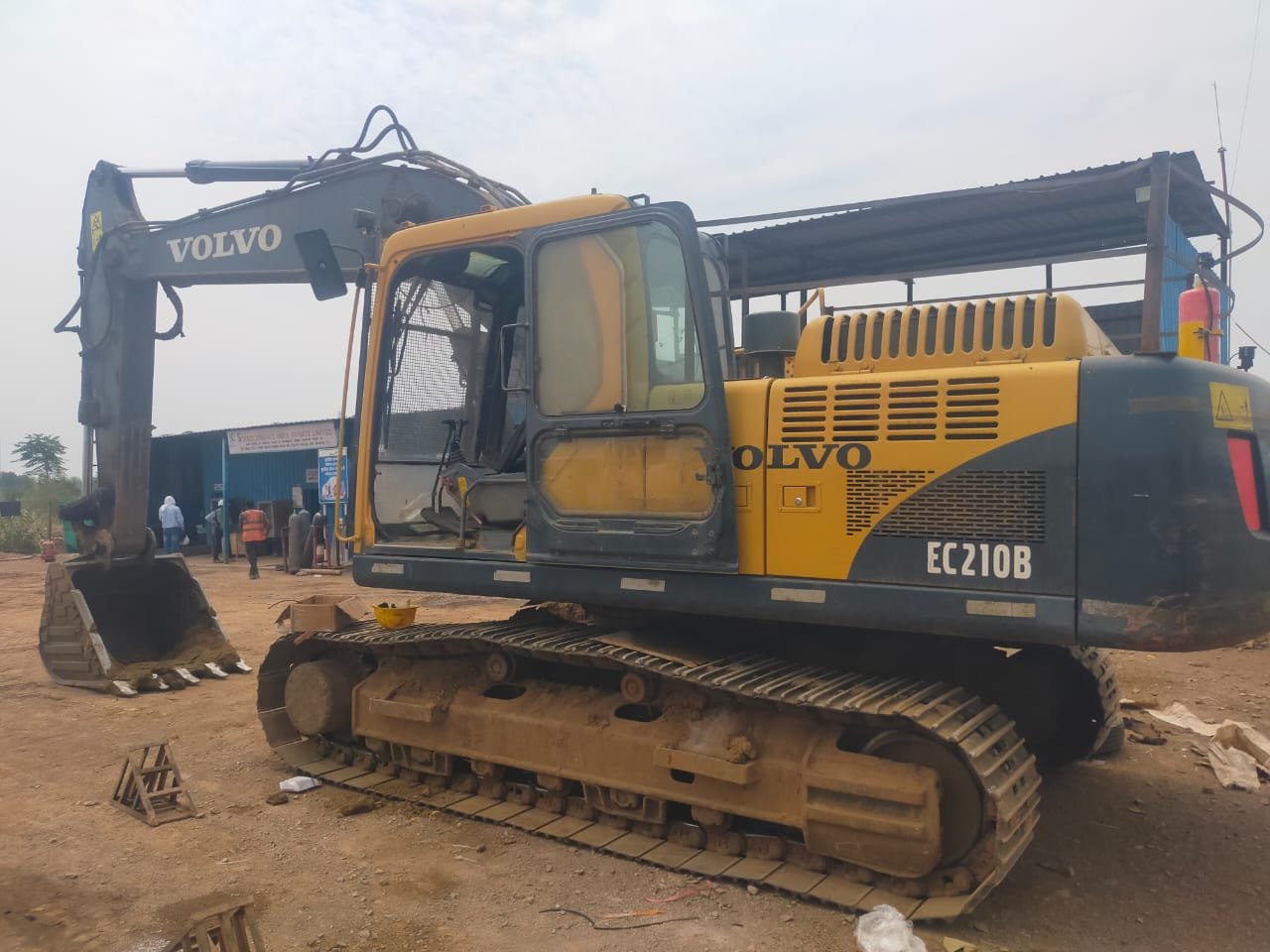
India's construction sector is one of the largest consumers of earthmoving equipment in Asia — and one of the most significant sources of construction equipment fire incidents. Road construction in Rajasthan summer heat, infrastructure projects in the Northeast during peak monsoon, urban metro construction in Delhi and Mumbai where ambient temperatures combined with equipment load factors push thermal stress to the edge of design tolerances — earthmoving machines across India face fire conditions that differ meaningfully from their European or North American equivalents.
The Earthmoving Machine Fire Suppression System is designed for this specific context. It covers the widest range of application vehicles: dozers, graders, compactors, scrapers, pipelayers, and other equipment that does not fall neatly into the mining vehicle category but faces equivalent fire risk from its engine and hydraulic systems.
A defining technical feature of this system from APS is the electrical activation method — the solenoid valve system is powered at 24V DC, compatible with the standard electrical systems of all major earthmoving equipment OEMs operating in India including Caterpillar, Komatsu, Volvo CE, JCB, Hyundai CE, and BEML. The skid-mounted installation format allows the system to be mounted to the vehicle chassis without welding, using purpose-designed bracket kits that are reversible for fleet maintenance requirements.
System discharge time of 7–10 seconds is one of the most critical specifications — this is the window within which the agent must fully saturate the protected zone to prevent flame re-establishment around the agent boundary. APS systems are hydraulically calculated against the actual geometry of the protected vehicle, not against a generic fire zone template.
APS Fire Protection Solutions Earthmoving Machine Fire Suppression System: Starting at Rs. 75,500 per set. Capacity: 10, 20, or 40 kg. Detection: electrical. Working pressure: 15 bar. Discharge time: 7–10 seconds. Operating temperature: -20°C to +80°C. Activation: 24V DC. Control panel included. Cabin alarm included. Certifications: CE, DGMS compliant, FM Approved, UL Listed, NFPA. Refill service available.
5. Construction Equipment Fire Suppression System
Construction sites across India present a fire risk combination that is distinct from both mine operations and highway transport. The equipment operates in close proximity to temporary fuel storage, electrical generators, compressed gas cylinders for cutting and welding, and combustible building materials. A vehicle fire on a construction site is simultaneously a machine fire and a site fire risk — the two threats compound each other in ways that do not apply in open-pit mine environments.
The Construction Equipment Fire Suppression System is designed for the specific machine types that dominate Indian construction fleets: hydraulic excavators (the workhorse of Indian infrastructure projects), backhoe loaders, crawler cranes, concrete pump trucks, tower crane undercarriages, piling rigs, and road construction machinery.
The pneumatic activation method used in the APS construction equipment system is a deliberate design choice. Pneumatic activation — using compressed nitrogen to trigger the suppression valve rather than an electrical solenoid — eliminates the dependency on the vehicle's electrical system. On construction equipment, particularly on older machines and machines operating in high-humidity monsoon conditions, electrical fault rates are significantly higher than on new HEMM vehicles in managed mine environments. A system that fails to activate because the solenoid wiring has corroded or the control panel has developed a fault is not a safety system. Pneumatic activation removes that failure mode entirely.
AIS-135 certification — listed on the APS construction equipment system — is particularly relevant for construction equipment deployed on central and state government infrastructure projects, where tender specifications increasingly require AIS-135 compliant fire suppression on all vehicles operating on project sites.
APS Fire Protection Solutions Construction Equipment Fire Suppression System: Starting at Rs. 70,000 per set. Capacity: 25 kg. Activation: pneumatic. Temperature range: -20°C to +55°C. Pressure: 20 bar. Protection: engine, battery, cabin, fuel tank. Fire class: A, B, C. Certifications: UL Listed, AIS 135, FM Approved, R107. Cabin alarm included.
6. Truck Fire Suppression System
India's road freight sector runs on trucks — an estimated 10 million-plus commercial trucks operating across national and state highways, carrying everything from coal and steel to food and pharmaceuticals. Engine compartment fires on long-haul trucks are a documented, recurring hazard. Extended highway running at high RPM, inadequate maintenance intervals, fuel system deterioration, and the electrical system complexity of modern BS6-compliant trucks combine to produce engine fire risk that is spread across the entire national highway network.
The Truck Fire Suppression System is engineered for the specific characteristics of commercial truck engine configurations: inline diesel engines typically mounted longitudinally in a forward or forward-tilting cab-over configuration, with fuel tanks mounted on the chassis frame, battery banks typically mounted below the cab steps, and electrical system routing through the cab floor and firewall.
A notable specification on the APS truck system is the 100 dB alarm volume. On a highway truck cab at speed, with engine noise, road noise, and HVAC operating simultaneously, ambient cab noise levels can reach 85–90 dB. A suppression system alarm that cannot exceed this level by a meaningful margin will not alert the driver in time to initiate safe vehicle stop and evacuation. 100 dB output — measured at the cab control unit — ensures the alarm is audible regardless of operating conditions.
The system's relay output structure — alarm relay, supervisory relay, and trouble relay — allows integration with the truck's fleet telematics system on vehicles equipped with GPS tracking. This means a fire alarm event on any truck in a managed fleet generates an immediate notification to the fleet control room, not just to the driver. For logistics operators managing large fleets across multiple states, this integration is operationally significant.
APS Fire Protection Solutions Truck Fire Suppression System: Starting at Rs. 70,000 per set. Capacity: 12 kg. Alarm: 100 dB cabin alarm. Relay outputs: alarm, supervisory, trouble. Backup battery: 12 AH. Reset time: 5 seconds. Control keys: evacuate, mute buzzer, system reset. Certifications: R107, AIS 135, FM Approved, UL Listed. Cylinder mounting: horizontal.
7. Excavator Fire Suppression System
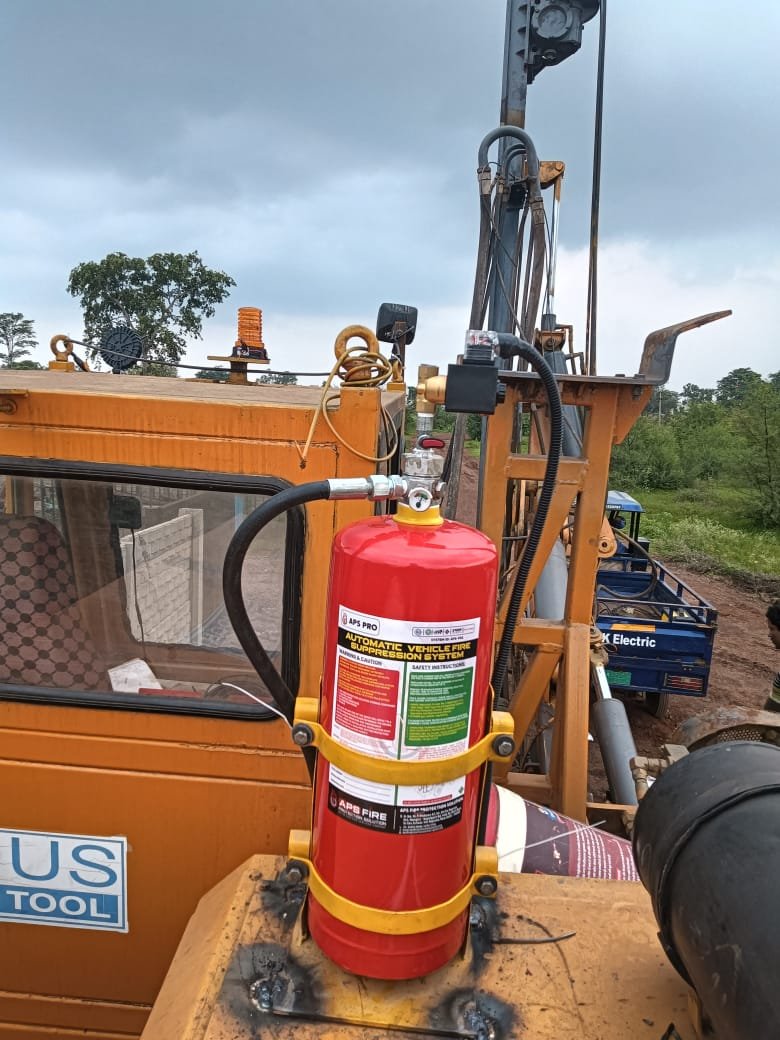
The hydraulic excavator is arguably the highest fire-risk single machine type in the Indian market. No other vehicle combines a high-temperature diesel engine, a high-pressure hydraulic system distributed through multiple service circuits (boom, arm, bucket, slewing, travel, and attachment), a fuel tank in direct proximity to exhaust components, and a battery bank in a single chassis with the same total fire hazard density as a large hydraulic excavator.
The fire zone geometry of an excavator is also more complex than a dump truck or dozer. The superstructure rotates independently of the undercarriage. The boom and arm carry hydraulic hoses through their full range of motion. The counterweight area houses the engine, often in a semi-enclosed housing that concentrates heat and limits airflow. A suppression system for an excavator must deliver agent to fire zones in the superstructure that may be oriented at any angle relative to the cylinder mounting position when the fire occurs.
The APS Excavator Fire Suppression System's wide capacity range — 2 to 45 kg — reflects the actual range of excavators operating in the Indian market, from 5-tonne mini excavators on urban civil projects to 90-tonne long-reach excavators in large open-cut mine operations. A 5-tonne mini excavator requires a 2–5 kg system with a single protected zone. A 90-tonne excavator requires a 25–40 kg system with multiple independent zones and a control panel capable of monitoring each zone separately. Applying the same system to both machines is one of the most common and most dangerous specification errors in the Indian market.
APS Fire Protection Solutions Excavator Fire Suppression System: Starting at Rs. 55,000 per set. Capacity: 2–45 kg. Agent: dry chemical. Operation: auto and manual. Protection: engine, battery, fuel tank, cabin. Certifications: UL Listed, R107, AIS 135, FM Approved. Cabin alarm included. Service coverage: India. Service duration: 10–15 days from order.
8. Crane Fire Suppression System
Cranes represent a fire protection challenge that is fundamentally different from ground-level HEMM equipment. The fire risk is concentrated at the base of the crane — in the engine compartment, hydraulic pump bay, and electrical distribution panel — but the operator is located at height, often with limited situational awareness of what is happening at the machine base during lifting operations. The combination of delayed operator awareness, height-restricted evacuation, and high-value load consequence (a crane fire mid-lift over a construction site or industrial facility creates compound risk that extends well beyond the crane itself) makes crane fire protection a particularly high-consequence system design task.
The crane operating environment in India is also notably harsh. Tower cranes on high-rise construction projects in coastal cities — Mumbai, Chennai, Kochi — face salt-laden air that accelerates corrosion of detection cables and electrical connections. Mobile cranes in industrial plants face chemical vapour contamination. All-terrain cranes on infrastructure projects face the same dust and heat extremes as other construction HEMM equipment.
The semi-automatic operation mode on the APS Crane Fire Suppression System is a deliberate design provision. In crane applications, an automatic discharge that occurs without operator awareness during a critical lift phase could itself create a secondary hazard. The semi-automatic mode ensures the cabin alarm sounds and the operator has a defined (short) window to assess the situation and confirm or abort the suppression discharge before automatic release occurs. This is the kind of application-specific engineering consideration that generic vehicle systems do not address.
APS Fire Protection Solutions Crane Fire Suppression System: Starting at Rs. 70,000 per piece. Capacity: 12 kg. Agent: dry chemical (BC powder). Operation: semi-automatic. Material: metal alloy construction. Protection: engine, fuel tank, battery, cabin. Certifications: UL, CE. Cabin alarm included. Cylinder mounting: horizontal.
9. Diesel Engine Fire Suppression System
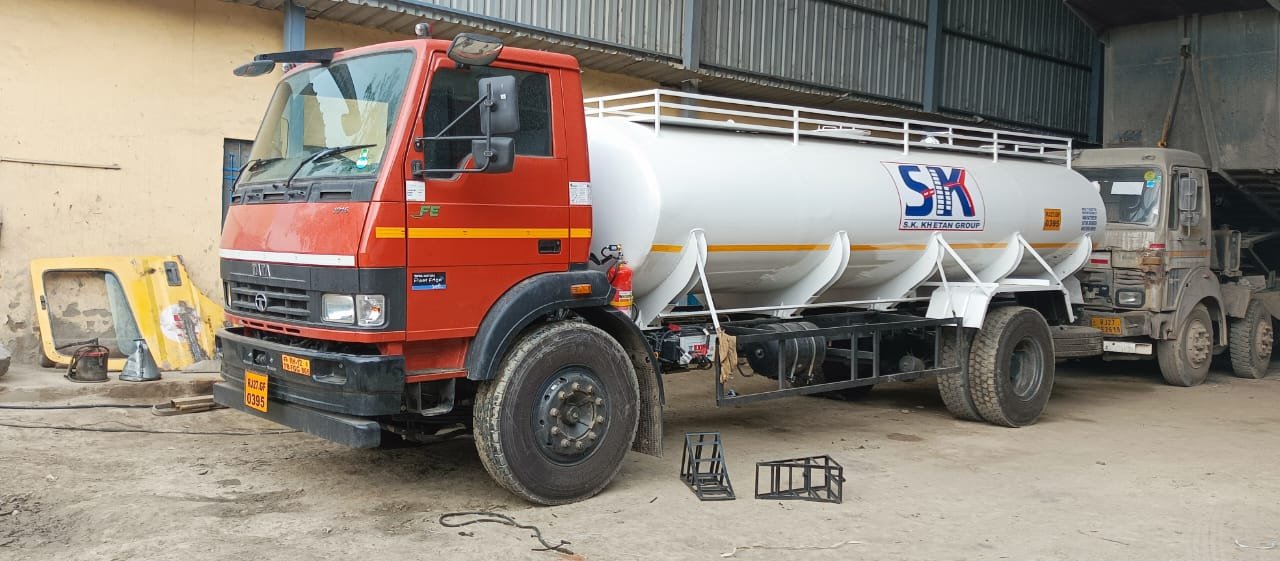
While the engine fire suppression system described above covers all vehicle types, the Diesel Engine Fire Suppression System is specifically configured and certified for the fire risk profile of diesel-powered engines as a primary hazard. The distinction matters because diesel engine fires have a specific combustion chemistry — diesel has a higher flash point (above 60°C) than petrol but ignites readily as a vapour or fine spray in contact with exhaust surfaces, and diesel engine fires tend to be sustained and hot rather than explosive. The suppression agent selection, nozzle positioning, and discharge rate are all optimised for this specific fire behaviour.
In India, the Diesel Engine Fire Suppression System is the workhorse product for the enormous range of diesel-powered commercial vehicles that fall outside the HEMM and dedicated construction equipment categories: tipper trucks, tanker trucks, concrete mixers, garbage compactors, recovery vehicles, and specialised transport equipment. DGMS guidelines explicitly reference diesel engine fire suppression as part of the AFDSS framework for mining vehicles, and the DGMS compliance marking on the APS system reflects this.
APS Fire Protection Solutions Diesel Engine Fire Suppression System: Starting at Rs. 70,000 per set. Capacity: 10 kg. Agent: dry chemical. Operation: fully automatic. Design: as per DGMS guidelines. Protection: engine, fuel tank, battery, cabin. Certifications: CE. Cabin alarm included. Cylinder mounting: horizontal.
10. Fuel Tank Fire Suppression System
The fuel tank is a critical but often independently overlooked fire risk zone on many Indian commercial and industrial vehicles. On a standard highway truck, the diesel tank is mounted on the chassis frame, typically below the cab or behind the cab steps — in direct proximity to hot exhaust pipes and at significant distance from the engine bay system's nozzle coverage. On fuel tanker trucks — carrying petrol, diesel, kerosene, or LPG in bulk — the fuel containment system itself is the primary fire hazard, and the entire vehicle is essentially a mobile fuel tank.
The Fuel Tank Fire Suppression System addresses this zone as a standalone protection installation, or as an additional zone added to an engine bay system on vehicles where the fuel tank is outside the primary system's coverage area. The capacity range — 10, 20, 40, and 60 kg — reflects the range from a single-tank truck installation through to a multi-compartment fuel tanker where each compartment requires independent nozzle coverage from a shared suppression system.
For fuel tanker operators in India, this system is not merely a safety investment — it directly addresses liability exposure under the Petroleum Act 1934, the Static and Mobile Pressure Vessels (Unfired) Rules, and the growing body of state-level petroleum transport regulations that are increasingly requiring demonstrated fire suppression capability on all bulk petroleum transport vehicles.
APS Fire Protection Solutions Fuel Tank Fire Suppression System: Starting at Rs. 82,500 per set. Capacity: 10, 20, 40, and 60 kg. Agent: dry chemical. Operation: automatic and semi-automatic. Protection: fuel tank, engine, cabin, battery. Design standard: DGMS, NFPA, FM Approved, UL Listed, IS standard. Control panel included. Refill service available. Made in India.
11. EV Battery Fire Suppression System
The EV Battery Fire Suppression System is the newest and, technically, the most complex product in the APS vehicle fire suppression range. It addresses a fire risk that did not exist at commercial scale in India five years ago and is now growing faster than any other vehicle fire hazard category: thermal runaway in lithium-ion battery packs.
Thermal runaway is not a conventional fire. A conventional engine compartment fire has a fuel source (diesel or hydraulic oil), an ignition source (hot exhaust surface or electrical arc), and an oxygen source (ambient air). Remove any one of these and the fire stops. Thermal runaway is a chemical decomposition reaction that is self-sustaining — the battery cells generate their own heat and oxygen as they decompose, which accelerates decomposition in adjacent cells, which generates more heat and oxygen. The reaction does not stop when you remove external ignition. It does not stop when you remove external oxygen. It stops when the electrochemical energy in the battery pack is exhausted, which in a large lithium battery pack can take hours.
This is why the EV Battery Fire Suppression System is designed differently from every other vehicle system in the APS range. The system does not aim to extinguish thermal runaway after it is fully established — that is not a realistic objective with any conventional suppression agent. The system aims to detect the early thermal signatures of impending thermal runaway (temperature rise in the battery management system, localised heat above the battery cells) and intervene before the runaway cascade is irreversible. Early-stage suppression, combined with cooling action from the discharge agent, can interrupt the cascade in its early phase and prevent a localised cell failure from becoming a pack-level event.
AIS-135 certification is a core specification for the APS EV Battery system, reflecting India's specific regulatory framework for electric vehicle fire protection. The 24V battery power supply and PESO certification (Petroleum and Explosives Safety Organisation) ensure the system meets India's specific regulatory requirements for pressurised vessel use in vehicle applications.
As India's EV fleet grows — electric buses in state transport corporations across Delhi, Maharashtra, and Tamil Nadu, electric three-wheelers in logistics, electric trucks beginning to enter the freight sector — the EV Battery Fire Suppression System is the fastest-growing product category in the APS vehicle range.
APS Fire Protection Solutions EV Battery Fire Suppression System: Starting at Rs. 1,25,000 per piece. Capacity: 10, 20, or 40 kg. Agent: ABC dry chemical powder. Operation: fully automatic. Protection: battery compartment, engine, fuel area, cabin. Body material: stainless steel. Certifications: CE, PESO, UL. AIS 135 certified. Cabin alarm included. Cylinder mounting: horizontal. Made in India.
12. Electric Vehicle Fire Suppression System (Full Vehicle)
Where the EV Battery system focuses specifically on the battery compartment as the primary fire hazard zone, the full Electric Vehicle Fire Suppression System provides comprehensive protection across all fire risk zones of an electric vehicle — battery compartment, motor and inverter bay, auxiliary electrical systems, and the vehicle cabin for passenger-carrying EVs.
In India's current EV landscape, this system is most relevant for electric buses operating in state transport corporation fleets and private intercity operators, electric trucks entering commercial freight operations, and electric three-wheelers and four-wheelers in delivery fleet operations where the vehicle is also a workplace and the operator's safety is a direct employer liability.
The system is built to DGMS design standards — a specification that reflects the reality that many of the earliest large-scale EV deployments in India are in mining-adjacent applications: electric haul trucks and battery-electric light vehicles beginning to replace diesel equivalents in surface mining operations as India's mining sector aligns with national decarbonisation targets.
APS Fire Protection Solutions Electric Vehicle Fire Suppression System: Starting at Rs. 1,25,000 per piece. Agent: dry chemical. Operation: fully automatic. Protection: battery, engine, fuel area, cabin. Body material: stainless steel. DGMS design. Certifications: CE, PESO, UL. Cabin alarm included. Cylinder mounting: horizontal. Made in India.
13. Automatic Fire Detection and Suppression System (AFDSS)
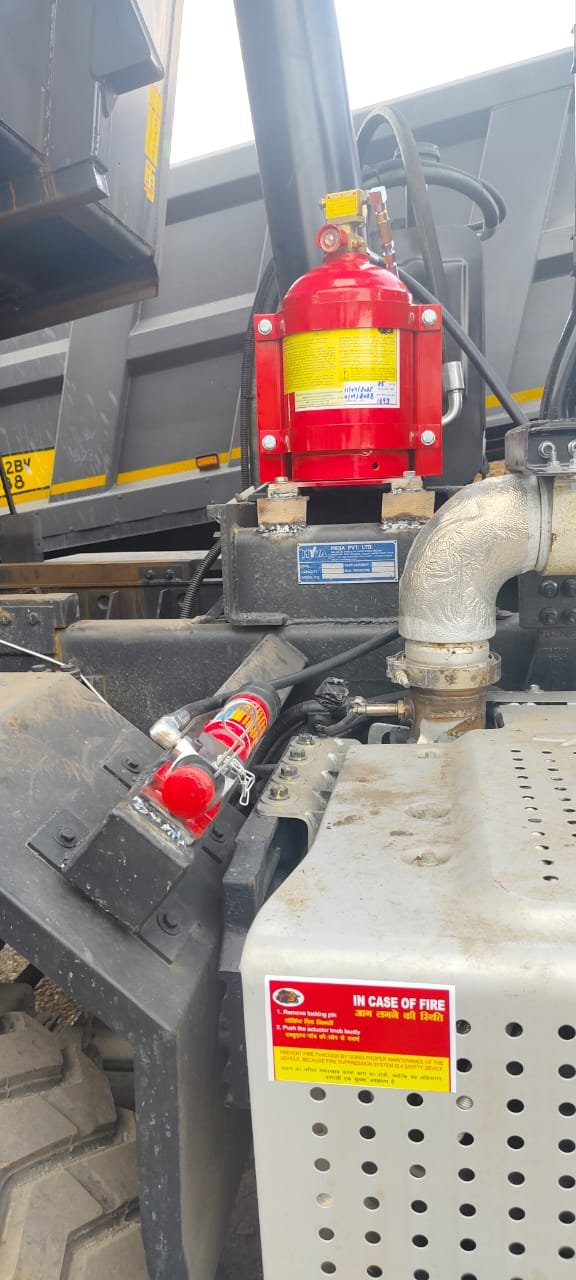
The Automatic Fire Detection and Suppression System (AFDSS) is the system designation used by DGMS Circular No. 6 of 2020 and by the broader Indian mining safety regulatory framework. In product terms, it is the fully integrated, multi-zone Vehicle Fire Suppression system that incorporates advanced detection, a dedicated control panel, multi-zone nozzle networks, and cabin alarm — everything required for DGMS compliance documentation purposes.
The CE, DGMS, and RDSO certification combination on the APS AFDSS system is specifically significant. RDSO — Research Designs and Standards Organisation, the technical arm of Indian Railways — certification indicates that the system meets the requirements of Indian Railways' equipment fire safety standards, which are among the most stringent in any Indian industrial sector. This makes the APS AFDSS system appropriate for railway maintenance vehicles, track maintenance machines, and on-track plant operating within railway infrastructure environments.
The multiple capacity options — 10, 20, and 40 kg — allow a single system design platform to be scaled across the full range of HEMM and heavy vehicle types without redesigning the control architecture for each vehicle class.
APS Fire Protection Solutions AFDSS: Starting at Rs. 60,000 per piece. Capacity: 10, 20, or 40 kg. Agent: dry chemical. Operation: fully automatic. Material: metal alloy. Protection: engine, battery, fuel tank, cabin. Certifications: CE, DGMS, RDSO.
14. AFDSS Vehicle System (Full Integration Package)
The AFDSS Vehicle System is the premium integrated package — the system designed for operators who need not just the suppression hardware but the full compliance documentation, supply-and-install service scope, and AMC support in a single contractual package. This is the product that mining companies, large construction contractors, and logistics fleet operators specify when they need turnkey vehicle fire protection with documented compliance against DGMS, AIS-135, and insurance requirements.
The NBC India design standard listed on this system is particularly relevant for vehicles operating in or around buildings governed by NBC 2016 — specifically for mobile industrial equipment operating inside warehouses, manufacturing facilities, and building construction projects where the vehicle's fire risk interacts with the building's fire safety design.
APS Fire Protection Solutions AFDSS Vehicle System: Starting at Rs. 1,00,000 per piece. Capacity: 10, 20, or 40 kg. Agent: BC dry powder. Operation: auto and manual. Design standard: UL Listed, FM Approved, DGMS, NBC India, IS, NFPA. Protection: fuel tank, cabin, battery, engine. AMC available. Certifications: UL Listed, AIS 135, R107, FM Approved. Supply and install scope included. Made in India.
15. Fire Suppression System for Delivery Trucks
India's e-commerce and last-mile delivery sector has created a new and rapidly growing fleet category — delivery trucks ranging from small Tata Ace-class light commercial vehicles to medium-duty trucks operating in dense urban environments across all major Indian cities. These vehicles face a specific risk combination: high daily mileage in stop-start urban traffic that generates sustained engine thermal stress, operation in narrow lanes and market areas where a vehicle fire creates immediate public safety risk, and the growing prevalence of lithium battery-powered two-wheelers and e-bikes being carried in delivery vehicle cargo areas.
The Delivery Truck Fire Suppression System addresses the engine compartment and battery compartment on these vehicles specifically — the two zones where fire incidents in this fleet category most frequently originate. At 10 kg capacity with BC dry powder agent and CE certification, it is designed for cost-effective fleet-wide deployment across large delivery vehicle fleets where per-vehicle installation cost is a critical commercial consideration.
APS Fire Protection Solutions Fire Suppression System for Delivery Trucks: Starting at Rs. 62,500 per piece. Capacity: 10 kg. Agent: BC dry powder. Operation: auto and manual. Body material: mild steel. Protection: engine, battery. Certifications: CE. Made in India. Installation services available.
16. Dry Chemical Vehicle Fire Suppression System
The Dry Chemical Vehicle Fire Suppression System is the explicitly agent-typed variant in the APS range — designed for operators and specifiers who require a documented ABC dry chemical powder system specifically, either because their risk assessment mandates ABC-rated agent (covering Class A solid combustibles in addition to Class B liquid and Class C gas fires) or because their insurance specification or client contract requires the specific agent type to be named in the system documentation.
This matters more than it might initially appear. In India's tender and procurement environment — particularly for government contracts, PSU projects, and international mining company supply chains — equipment specifications frequently mandate agent type, rating, and IS standard compliance number explicitly. A system that meets the functional requirement but cannot document agent specification to IS 4308 (dry powder) or IS 14069 (ABC dry powder) may fail procurement review even if it would perform equivalently. The APS Dry Chemical system is designed for exactly this procurement environment.
NFPA, UL Listed, FM Approved, and DGMS certifications in combination cover the broadest range of Indian and international procurement specifications that any single vehicle suppression product carries in the APS range.
APS Fire Protection Solutions Dry Chemical Vehicle Fire Suppression System: Starting at Rs. 70,000 per piece. Capacity: 12 kg. Agent: ABC powder. Operation: auto and manual. Installation: skid mounted. Design standard: NFPA, UL Listed, FM Approved, DGMS, IS. Protection: fuel tank, cabin, battery, engine. Control panel included. Refill service available. Certifications: R107, UL Listed. Made in India.
17. Fire Suppression System for Heavy Equipment
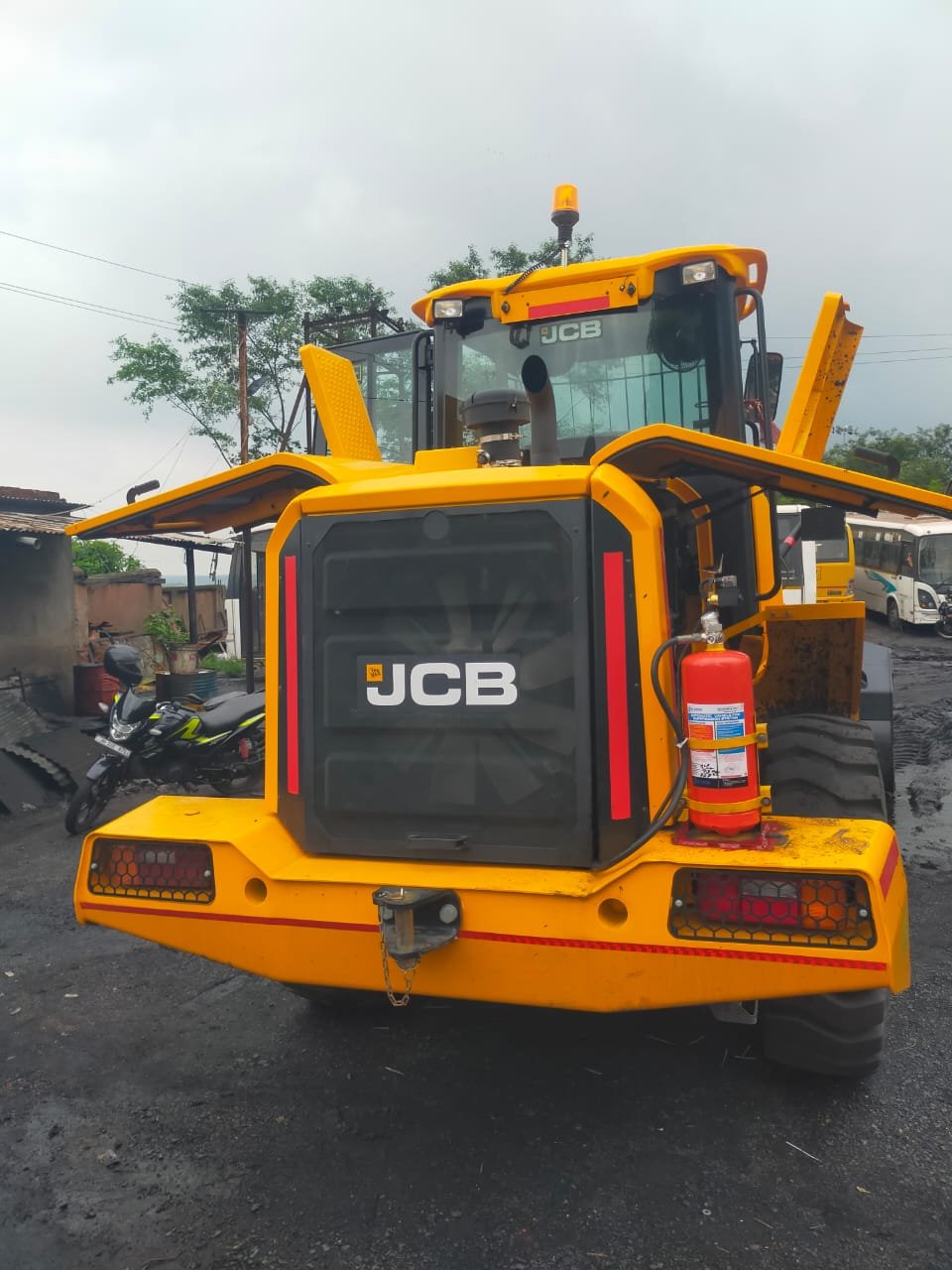
The Fire Suppression System for Heavy Equipment is the most comprehensively specified product in the APS vehicle range — and the one that most clearly reflects APS's positioning as a turnkey fire safety partner rather than a component supplier. The scope of service listed on this product — inspection, consultation, training, installation, maintenance — covers the full lifecycle of a fire suppression installation, from initial site survey through to annual AMC renewal.
The mechanical cable activation method on this system is a deliberate engineering choice for certain heavy equipment applications. Mechanical cable activation uses a physical pull-wire to release the suppression valve rather than an electronic solenoid. It is the most reliable activation mechanism available for heavily degraded electrical environments — equipment that has been in service for many years, equipment that has suffered significant electrical system deterioration, or equipment operating in environments so electrically hostile that solenoid reliability cannot be guaranteed. In India's vast fleet of older construction and mining equipment — much of which has been in service for a decade or more with variable maintenance histories — mechanical cable activation is the correct specification choice for retrofit installations.
The 24x7 support and pan-India service availability commitments on this product reflect the operational reality of heavy equipment fire protection: incidents do not happen during business hours, and a post-discharge support call at 3am from a mine site in Madhya Pradesh needs to get a real response.
APS Fire Protection Solutions Fire Suppression System for Heavy Equipment: Starting at Rs. 66,000 per piece. Capacity: 12 kg. Agent: BC dry powder to IS 4308 / 14069. Activation: mechanical cable. Operation: auto and manual. Service scope: turnkey — inspection, consultation, training, installation, maintenance. Compliance: IS, NFPA, NBC India, UL, R107. Protection: engine, fuel tank, battery, cabin. Fire class: A, B, C. Fire rating: 8B to 55B. Team size: 25+ certified engineers. 24x7 support. Pan-India service. Made in India.
How Detection Technology Shapes Every System Type
Reading through the system types above, you will have noticed that detection technology varies across the range. This is not a coincidence or a product differentiation exercise — detection method is one of the most consequential engineering decisions in any vehicle suppression system, and the right choice depends on the specific vehicle and operating environment.
Linear Heat Sensing (LHS) cable is the most widely used detection technology across the APS range. It provides zone-length coverage of the routed areas, activates at a defined temperature threshold at any point along its length, and is robust enough for mining and construction environments when correctly specified and installed. LHS cable requires the electrical circuit to remain intact for alarm signalling, which makes regular inspection of cable condition essential — particularly on older vehicles where vibration damage to the cable insulation is a common maintenance finding.
Thermal tube detection is a fully mechanical, power-independent option. The pressurised polymer tube — routed directly through the fire hazard zone — both detects and in direct-acting systems delivers the suppression agent through its rupture point. No electricity, no control panel, no wiring fault possible. The trade-off is that the tube must be replaced after any activation and its pressure integrity must be verified at every maintenance visit. For HEMM applications where electrical fault rates are high and the detection reliability consequence of a miss is catastrophic, thermal tube is the correct choice.
Multi-sensor detection — combining smoke, heat, and in some cases infrared flame sensors — is the specification direction under the updated AIS-135 standard for bus occupant compartment fire protection. Multiple sensor types working in combination reduce false alarm rates and provide earlier fire signature detection than any single sensor technology. The DRDO CFEES research that underpins the AIS-135 occupant compartment requirements specifically validated the performance advantage of multi-sensor detection in bus fire scenarios — this is not a marketing claim, it is a conclusion from controlled fire test data.
Indian Compliance Framework — What Each Vehicle Type Requires
India's vehicle fire suppression compliance framework is specific to vehicle category and operating context. Understanding exactly which framework applies to your vehicle is the starting point for any system selection decision.
For HEMM operating in coal and metalliferous mines, DGMS Technical Circular No. 6 of 2020 is the operative document. It mandates AFDSS for dumpers, dozers, drill machines, shovels, and excavators. It applies to both mine-owned and contractor-owned vehicles. Non-compliance results in prohibition notices. There is no exemption based on vehicle age or fleet size.
For buses — Type III category buses and school buses — AIS-135 (as amended through Amendment No. 1 of January 2022, Amendment No. 2 of September 2023, and Amendment No. 3 of May 2025) mandates fire detection and suppression for engine compartments and fire alarm and protection systems for occupant compartments. New buses subject to type approval after the amendment dates must carry compliant systems. The DRDO CFEES research that supports the occupant compartment requirement establishes the scientific basis for the specific performance parameters demanded.
For fuel tankers and petroleum transport vehicles, the Petroleum Act 1934 and Static and Mobile Pressure Vessels Rules create the compliance framework. PESO approval of the suppression cylinders is a specific requirement for any pressurised system installed on a petroleum transport vehicle.
For construction vehicles and crane operations, AIS-135 R107, and NFPA 17 collectively form the applicable standards. R107 — the UNECE Regulation governing fire protection in buses and coaches — has been adopted into Indian AIS standards and is referenced in most project-level specifications for construction equipment fire protection.
For electric vehicles, AIS-135 Amendment No. 3 and the emerging BIS standards for electric vehicle battery safety define the compliance landscape. The pace of regulatory development in EV fire safety in India is accelerating, and systems installed now should be designed to accommodate the stricter requirements that are expected from BIS and MoRTH in 2026–2027.
Choosing the Right System — The APS Decision Framework
When a fleet operator, mine manager, or safety officer calls APS Fire Protection Solutions for the first time, the first question our engineers ask is never "how many vehicles?" It is always "what is the vehicle, what does it carry, and where does it operate?"
The vehicle type determines the fire zone geometry and the protection zone scope. A 5-tonne excavator and a 90-tonne excavator are both excavators, but their suppression system designs are as different as the machines themselves.
The fuel and fluid load determines the agent type and cylinder sizing. A 400-litre hydraulic system on a large dumper requires a twin-agent design consideration that a 15-litre hydraulic system on a light vehicle does not.
The operating environment determines the detection technology, the construction specification, and the maintenance interval. A mine in Jharkhand requires different corrosion protection and dust sealing than a construction site in coastal Chennai, which requires different specifications again from a delivery fleet in Delhi.
The compliance framework determines the certification requirements that must be met for the system to satisfy DGMS inspectors, AIS-135 type approval, insurance specifications, or client contract requirements.
Only when these four factors are understood can the right system type be specified. Every APS vehicle fire suppression engagement begins with a site and vehicle assessment that works through this framework — because a system that is right on paper but wrong for the machine is not fire protection. It is an expensive liability.
About APS Fire Protection Solutions
APS Fire Protection Solutions is based in New Delhi and operates across India, supplying and installing automatic vehicle fire suppression systems for mining fleets, construction equipment, transport vehicles, electric vehicles, and heavy industrial machinery. Every system we supply carries documented certification — DGMS, AIS-135, UL, FM Approved, R107, NFPA, CE, PESO — matched to the specific compliance requirement of the vehicle and operating environment.
We provide the complete service scope: consultation and vehicle risk assessment, system design and engineering, supply of PESO-approved cylinders and IS-certified components, professional installation with as-built documentation, commissioning and testing, and Annual Maintenance Contract (AMC) support covering periodic inspection, refill services, and 24/7 post-discharge response.
Our installed base spans coal mines in Jharkhand and Chhattisgarh, open-cast mining operations in Odisha and Madhya Pradesh, construction equipment fleets on infrastructure projects across North India, logistics truck fleets in Delhi NCR, and electric bus deployments in multiple state transport corporation operations.